Books and recordings remain in their original language; translations cover the website’s text.
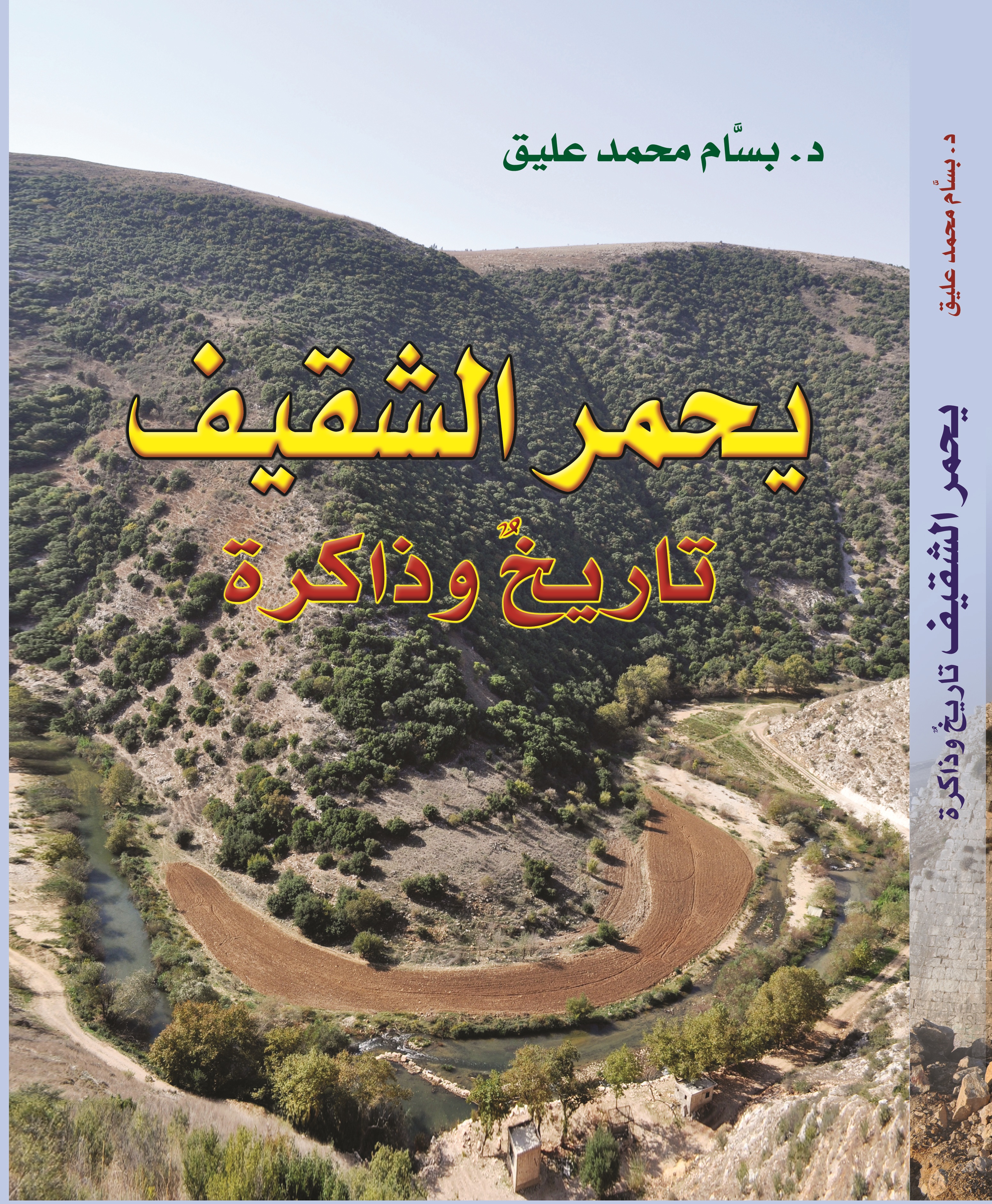
A book by Dr Bassam Olleik
Yohmor al-Chaqif: History and Memory
Table of contentsThe Gateway to the Heart
It is Yohmor… the haven of hearts and the warm embrace, the first cry and the final silence. Between them lies a long journey of mutual exchange, its bonds growing stronger little by little as we grow, never fading with death. The pull of its soil draws the dead and the living alike; however far the circle of our movement widens, Yohmor remains the sun around which we orbit.
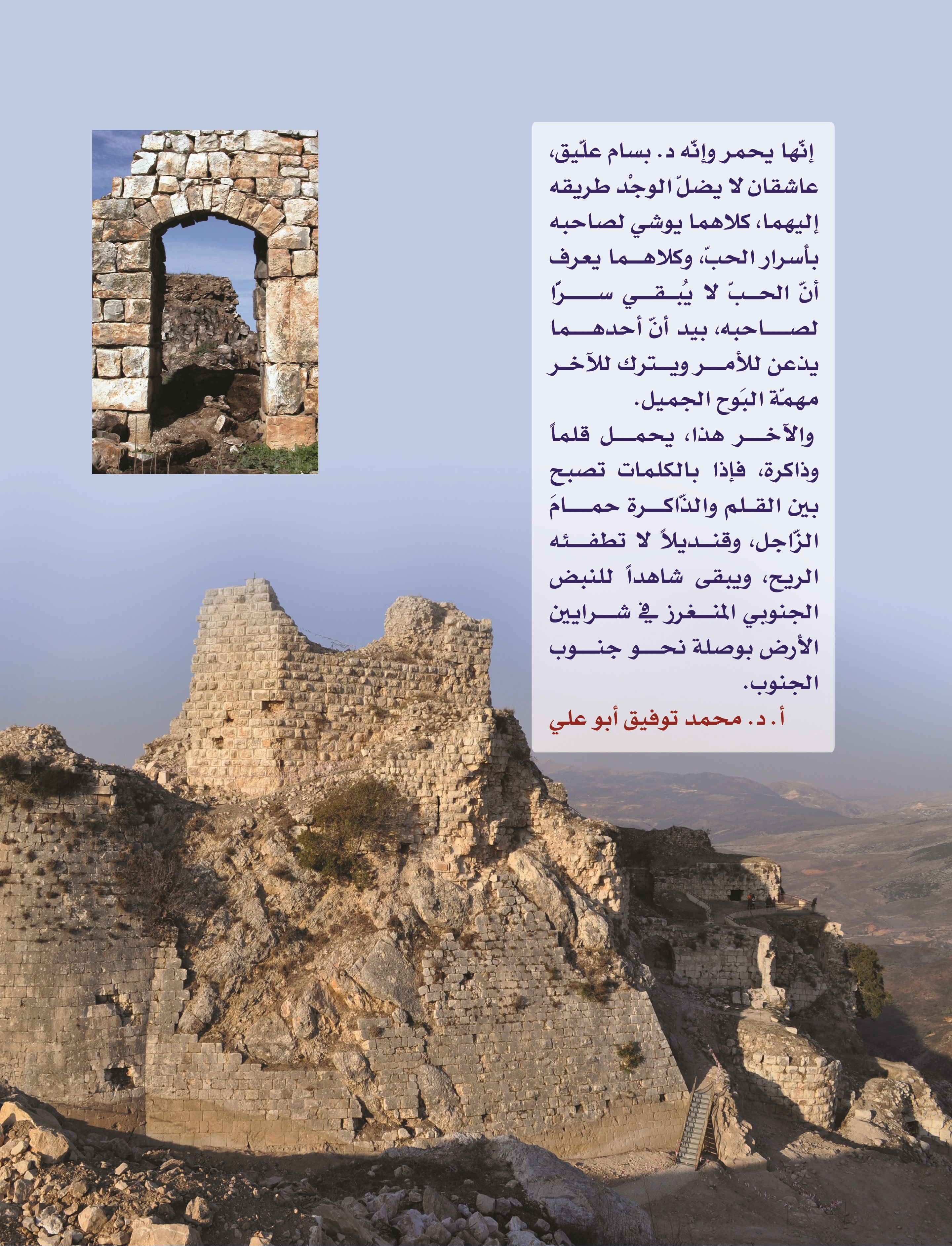
From time immemorial, the village has spread its houses and its longing between al-Chaqif Castle, the emblem of its pride, and the Litani River, bearer of goodness and cleanser of hearts. A peaceful village on the mountainside, a river proudly washing its feet and a castle keeping it company from above, it delights in its green plains and opens its doors wide to love and generosity. Its people are good people: they wove garments from simplicity, inscribed glories and acts of heroism in history, and built great edifices and strongholds for learning.
Between the castle and the river lie great love stories never written down. Yet hearts are fragrant with the heady scent of love, rising from the anemones nestled beside the rocks and from slopes studded with thorny broom spread across their expanses.
Between Ras al-Arid and the plain are epics of blood and sweat that no historian’s pen has recorded. Yet anyone who looks at the wrinkles of the olive trees in Shawshaba, al-Wadi, and Marj al-Baraka understands the greatness of our ancestors. Whoever gazes at those olive trees nestled in Chaqif al-Naml, the woods of al-Faqʿani, and Arid al-Muzhalaq, hanging like a chandelier between earth and sky, grasps the meaning of the blood Yohmor gave and understands why Amila triumphed over the ogre of this age…!
Some places inspire a special awe, a sacredness felt by every sense; even hardened hearts cannot escape it. Love wanders and loses itself in the plain as on the surface of the river, flowing over rocks and beneath the plane trees.
Has anyone followed the river through al-Khurm without their heart breaking open in reverence…? Or looked upon Chaqif al-Ballana without instinctively praising the Creator…?
And has anyone ever stood atop Arid Kaff al-Tibn without feeling like an eagle soaring through the sky, reciting: “Have We not opened your breast for you?”
Al-Chaqif Castle is Yohmor’s crown and the emblem of its pride, standing tall on our hills as a landmark of dignity. Over time it has become entwined with colorful tales in which red predominates; steadfastness adorns its pages and soothes the wounds inflicted by enemies.
Behind the plains and hills, the Litani tirelessly carved its course. A spring overflowing with life, it embraces the village on three sides and waters our valleys as they wind and descend toward the sea that claims our fresh water. Yet this river could not quench the village’s thirst: natural obstacles and politicians’ neglect have long stood between its water and the lips of its people. Every attempt has been a temporary measure, ending with the circumstances that gave rise to it. To this day Yohmor is borne by water, yet nearly killed by thirst.
The river and the castle are two pillars without which this identity cannot stand. Between them grew the story of one of our villages in Amila, a tale of struggle, generosity, oppression, and deprivation; a tale of patience, striving, sacrifice, and building, stretching across centuries on blessed land watered by its men’s sweat, its women’s tears, and its young people’s blood.
The stories of martyrs; pain, anger, and beauty; childhood dreams; toil, dignity, and pride; men’s brows darkened by all of this; the will of women who know no impossibility; a smile on the lips of one just beginning life; soil that grants those born on its hills the blessing of belonging. It is Yohmor… the hearts’ love for songs of purity and spontaneity…
The effort expended, the time given, the constant attempt to approach the truth in reading the mosaic of Yohmor’s garden of families—and above all the patience this thorny research required—make clear to any discerning person that the aim goes deeper than recording one family’s history and reaches further than writing about one individual.
In brief, from beginning to end the subject is us: Yohmor and its people who departed centuries ago, and those who will come centuries hence; ancestors, grandchildren, and all between them; kinship without clannishness; land, trees, and home; love stories; the chisel of hope that accompanies the poor person’s morsel as long as life lasts; tales of blood, sweat, and folk songs. We set them in ink on pages that will serve our descendants’ descendants and light the way for those researching this beloved village’s origins. It is a modest attempt to unearth a vanished history whose links were lost one after another, whose records were neglected and ravaged by ignorance and the harshness of life. It is a seed of history for Yohmor’s soil, a register of figures from the past and images of the present, in the hope that those who follow will continue the journey.
Memory cannot be trusted completely. It faces a fierce war waged with many weapons, weakening it before the tyranny of time’s machinery and the complexities of modern life. So that the letters of our names do not scatter into the depths of oblivion, we record part of ourselves for future generations and carve the features of our faces into a rock of Yohmor. We are not seeking to glorify someone without glory, or to praise a tribe in a boastful ode as in pre-Islamic times. That is not what this is about.
It is Yohmor… the nest of childhood and the haven of birds of paradise; Yohmor with its land and people, its natural simplicity and its complexities, the bitterness of its tobacco and the rapture of ataba songs on its hills. Its attraction knows no bounds; love draws creativity in a single direction. The beloved is a princess who makes the mind lose its impartiality despite its efforts. We must admit that the lovestruck pen draws from the beloved’s ink.
This is a social and scholarly exploration, a human inquiry into a village cast to the edges of the homeland, named Yohmor al-Chaqif. It does not claim to offer a complete picture of the village; it is a candle lighting the path for those who will dare to cross the darkness of our unknown history.
From the introduction to Yohmor al-Chaqif: History and Memory.
Bassam Mohammad Olleik
Yohmor al-Chaqif
Read and download
Table of contents
Choose a section to read or download as a PDF.